
Research
Current projects
Understanding youth social media engagement
- Sensitivity to social media feedback
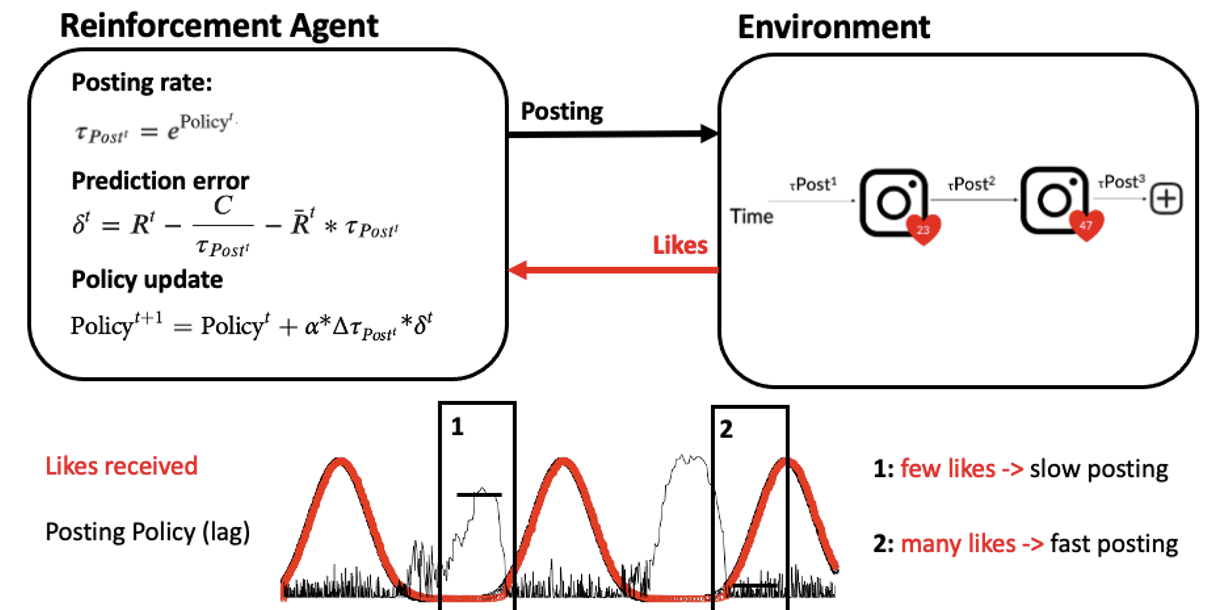
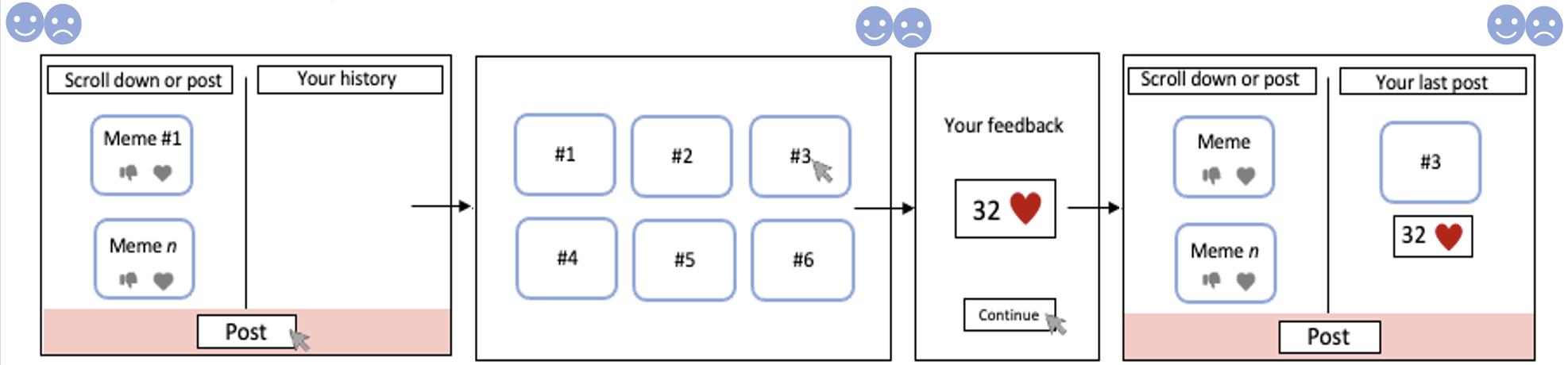
Infinite, algorithmically curated feeds have become a defining feature of social media, offering a continuous stream of content and frequent opportunities for social feedback (e.g., likes, comments, views). Because youth tend to show heightened reward sensitivity, these repeated feedback signals may powerfully shape what they attend to, how they feel, and how their engagement unfolds over time. At the same time, the emotional impact of social media depends on how youth engage: more active behaviors (e.g., liking content, posting, commenting) may be experienced differently than more passive behaviors (e.g., scrolling, browsing). Both forms of engagement may also interact with momentary mood and individual differences. This research examines how sensitivity to social feedback and patterns of engagement are linked to affective experiences and mental health. We use a multimethod approach combining behavioral experiments, social media trace data, and self-report measures to capture engagement and its psychological correlates across contexts and over time.
- Impact of social media information on opinion formation
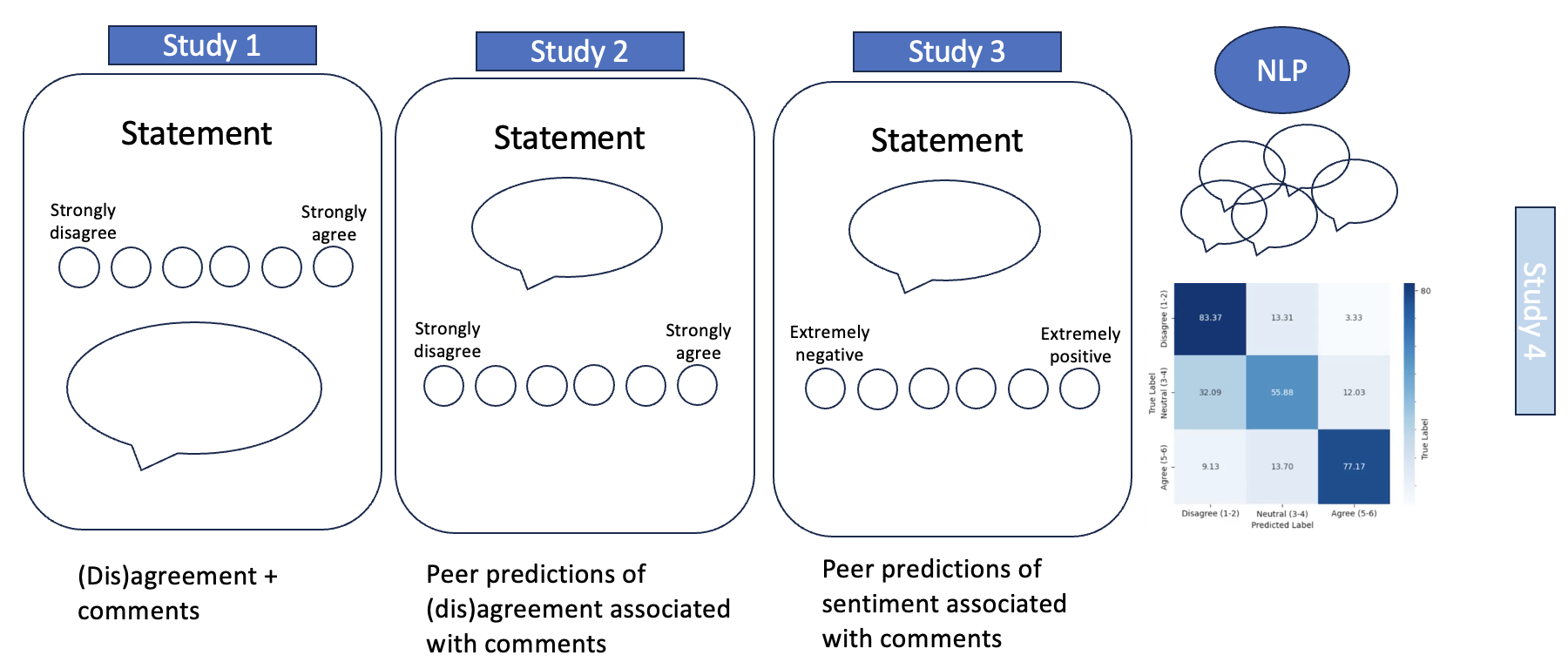
Today’s youth increasingly turn to social media not only for entertainment but also as a main source of information about global events. While information-seeking is a major motivation, little is known about how young people process what they encounter online. A major challenge is the complexity of digital content: information circulates from diverse sources of varying credibility, often presented with differing intensity and affect. Social media information, such as comments may guide interpretation of the world whether through positive support, critical opposition, or highly emotional responses. Moderate comments may encourage more reflective thinking. These signals may shape how youth evaluate information, influencing both their understanding and their belief about the world. This study investigates how peer feedback in the form of comments with varying levels of agreement and sentiment affects information processing and opinion formation in youth. We conduct controlled experiments that mimic key features of social media posts and integrate real-world peer comment data to examine their effects on opinion change. To characterize the emotional tone of comments, we use NLP and compare multiple language models (e.g., BERT and different GPT-based models).
Not straightforward
- The benefits and harms of social media use among individuals who identify as LGBTQIA+
Digital platforms sit at the heart of many young people’s social lives: shaping peer connection, identity exploration, and how they learn about the world. For LGBTQIA+ youth in particular, online spaces can offer community, information, and affirmation. At the same time, they can intensify minority stress through discrimination, harassment, and exposure to harmful content. Most theories of adolescent social media use emphasize normative developmental tasks such as autonomy seeking, peer validation, and identity exploration, but they often overlook the distinct realities and experiences of queer youth. This raises a central question: do digital environments function as protective spaces that support identity development, belonging, and well-being and/or do they amplify minority stress among queer youth? This project develops (1) a conceptual framework and testable model to explain how social media shapes identity-related learning and development among LGBTQIA+ youth, and how these processes relate to mental health; and (2) a mixed-methods design that integrates computational approaches, digital trace data, survey data, and qualitative accounts. We examine how different patterns and contexts of online engagement relate to identity exploration, belonging and mental health outcomes. This research aims to inform evidence-based interventions, platform design, and policy to ensure that digital environments foster empowerment and inclusion for LGBTQIA+ youth.

Global social media experiment: team Netherlands
Social media is used by billions of people worldwide, but much of the strongest evidence about its psychological and political effects still comes from US- and UK-based samples. Recent evidence indicates that these effects vary across cultural contexts, highlighting the need for large-scale causal evidence on outcomes such as polarization, intergroup attitudes, trust, and well-being. I contribute to a multi-country field experiment conducted in 23 countries (projected N > 8,000) that tests the impact of reducing social media use. Participants are encouraged to reduce their screen time for two weeks, after which we assess changes in news knowledge, exposure to online hostility, intergroup attitudes, well-being, and related factors such as political participation and susceptibility to misinformation. We also evaluate whether effects vary as a function of country-level characteristics (e.g., inequality, income, democratic institutions) and individual differences. Within the Netherlands team, I serve as team leader. This collaboration brings together 20 scholars from Dutch and Belgian institutions, including the University of Groningen, University of Amsterdam, Vrije Universiteit Amsterdam, Erasmus University Rotterdam, Leiden University, Nyenrode Business University, Amsterdam UMC, Vrije Universiteit Brussel, and Ghent University.
Across these projects, and in addition to the ManyLabs collaboration, I collaborate closely with Wouter van den Bos, Violeta Céspedes, Helle Larsen, Lucas Molleman, David Grüning and OneSec. I have also previously collaborated with Barbara Braams and Björn Lindström.